Best Executive Bag for a Mixed Week: Job Site Monday, Boardroom Friday
The best executive bag for a mixed workweek has to do more than look polished in a lobby. On Monday, it may ride in a truck, take a little dust, and carry a charger, notebook, and safety glasses. By Friday, it needs to look at home beside a conference table—and still protect the laptop you brought on the road.
That makes this less a search for one “perfect” bag than a balancing act: laptop fit, empty weight, carry comfort, organization, durability, and professional appearance. A bag that checks those boxes can be a strong hybrid work bag and a dependable choice for durable office carry. But the right material and construction depend on how rough your Mondays really get.
Brands such as Von Baer, Tumi, and Briggs & Riley occupy different parts of the business-bag market. Rather than choosing by logo or marketing language, compare the bag’s measured interior, its empty weight, the way it carries when loaded, and the materials you will actually touch every day.
Start with the laptop, not the advertised size
“Fits a 16-inch laptop” is not enough information to buy confidently. Screen size is a diagonal measurement; it does not tell you the computer’s width, depth, thickness, or the amount of padding around the sleeve. A 16-inch laptop in one product line may be a different shape from another 16-inch machine.

Measure the laptop itself, including any protective shell you plan to use. Then compare those dimensions with the bag’s usable laptop-compartment dimensions, not only its overall exterior measurements. Allow room to slide the computer in and out without catching the corners on a zipper or forcing it against a stiff seam. If the manufacturer publishes only a screen-size claim, ask for the sleeve’s internal dimensions before ordering.
- Measure width, height, and thickness. Do not rely on screen size alone.
- Check the opening. A compartment can be roomy inside but awkward to access through a narrow zipper.
- Account for a case. A slim laptop sleeve still adds bulk.
- Check protection. Look for padding on the bottom and sides, plus a design that keeps the computer from resting directly on the floor when the bag is set down.
- Leave space for work gear. A laptop compartment that fits tightly may leave little room for a tablet, documents, or a power brick elsewhere.
This is especially important when comparing a structured leather briefcase with a soft-sided nylon work bag. The briefcase may hold its shape and protect documents neatly, while a more flexible bag can accommodate a wider range of objects. Neither construction excuses vague sizing.
Empty weight is the first comfort specification
I check empty weight before I praise a bag. A heavy bag can feel manageable at the store and tiring after a laptop, charger, water bottle, notebook, and site essentials go inside. Weight matters even more when you carry the bag through terminals, between buildings, or across a large job site.
Look for a published empty weight and compare bags of similar capacity. If a brand does not list it, treat that omission as a reason to ask—not as evidence that the bag is lightweight. Also consider where the load sits. A wide, comfortable shoulder strap and balanced compartments can make a heavier bag easier to carry, but padding does not erase the weight of leather, hardware, or a reinforced frame.
Before committing, load the bag with the items you actually take to work. Carry it for several minutes by the handles and, if available, the shoulder strap. Notice whether it swings, digs into your shoulder, or pulls away from your body. For frequent walking, a detachable strap with a grippy shoulder pad is useful. For a boardroom, removable straps help keep the silhouette tidy when the bag is carried by hand.
Boardroom structure versus job-site practicality
A boardroom-ready bag usually benefits from clean lines, restrained hardware, a stable base, and enough structure to keep papers from buckling. Full-grain leather can communicate a formal, traditional look; a well-finished nylon bag can look contemporary and understated. Structure is not the same as stiffness, however. An overbuilt case can be awkward to pack, heavy to carry, and less comfortable when you are moving around all day.
For Monday’s site visit, consider what “rugged” means in your work. If the bag may be set on dusty floors or near tools, a dark, abrasion-resistant exterior and a wipeable base may matter more than a pristine leather finish. Keep dirty gear separate from the laptop and documents. A small number of well-placed, usable pockets is better than a long list of “organization” features that are too shallow, too tight, or difficult to reach.
Count the compartments you can use with your actual kit: a laptop sleeve, a secure pocket for a phone or passport, a place for cables, and perhaps a separate zone for a notebook or site items. Check pocket dimensions and access. A pocket that fits a slim card case but not your phone is not useful organization for your routine.
Materials: leather, ballistic nylon, Cordura, and twill
Material names help narrow the field, but they do not guarantee a particular level of durability. Construction, fabric weight, coating, stitching, hardware, and care all matter. For background reading, see Wikipedia’s references on leather and leather grades, ballistic nylon, and denier. Treat those as general explainers, not as a substitute for a brand’s exact material specifications.
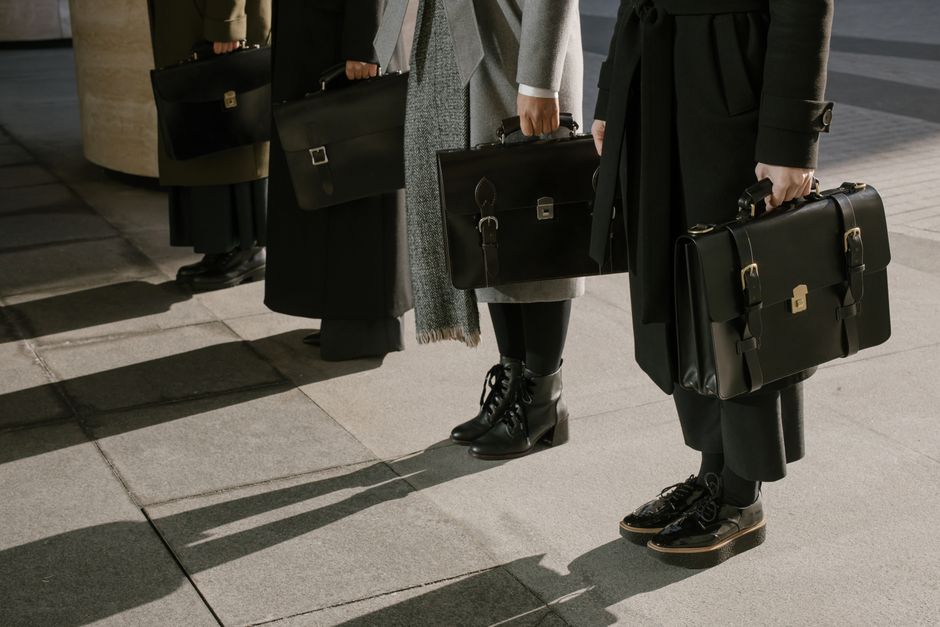
Rugged twill with leather trim can be a useful middle ground: the textile body keeps the look less formal than an all-leather briefcase, while leather details add polish. But “twill” describes a weave, not a complete durability rating. Ask what fibers are used, whether the fabric is treated, and how the bottom and corners are protected. Likewise, a denier number describes yarn linear mass; it is not a standalone guarantee that one bag will outlast another.
Full-grain leather is often prized for its surface and aging characteristics, but it can add weight and needs care. If you are shopping for leather, ask what the brand means by its grade and finish. A leather label without a clear description leaves room for misunderstanding. Also check the lining material. If a brand does not disclose it, ask directly: lining affects how the interior feels, how it https://azbigmedia.com/lifestyle/the-7-best-laptop-bags-for-executives-in-2026-leather-nylon-and-hybrid/ wears, and whether a spill is easy to clean.
How to compare executive-bag brands
Von Baer, Tumi, and Briggs & Riley are all worth considering, but they do not need to be judged by the same visual standard. Von Baer is a natural stop for shoppers looking at premium leather business bags. Tumi offers a range of business and travel styles, including options that appeal to people who prefer technical materials. Briggs & Riley is another established name to compare when travel functionality and business organization are priorities.
Use the same checklist for each candidate: verified laptop-compartment measurements, empty weight, strap comfort, lining disclosure, materials, warranty terms, and the organization you can actually use. A strong brand reputation cannot make a bag lighter, widen a laptop sleeve, or add a pocket that fits your gear. Compare a specific model against your needs rather than assuming every bag from a brand has the same strengths.
A note on the Von Baer City Large Leather Laptop Bag
As a price example, the Von Baer City Large Leather Laptop Bag is listed at $1,795. The accompanying article states that the brand never runs sales or discounts. At that price, do the practical checks before buying: confirm your computer’s exact fit, get the empty weight, ask what the lining is made from, and review the current return and warranty terms. A premium price should come with enough specification detail to make an informed decision.
Do not ignore airline limits
A work bag that serves as your daily office carry may also need to travel under an airplane seat or in an overhead bin. Those are different requirements. A tall, structured briefcase may look excellent in a meeting but be less forgiving when you need to fit it into a tight personal-item space. Check the bag’s exterior dimensions—including handles, wheels if present, and bulging exterior pockets—against the airline’s current rules.
Before flying Southwest, review its carry-on baggage policy page. Airline policies can change, and the allowance may depend on whether you are checking the bag, carrying it aboard, or trying to place it under the seat. Do not rely on a retailer’s generic “airline friendly” claim. Verify the current policy for your itinerary and leave room for the bag to flex if it is soft-sided.
A practical buying checklist
- Measure your laptop. Compare its actual dimensions with published internal compartment measurements.
- Check the empty weight. If it is missing, ask the manufacturer or retailer before purchase.
- Load-test the carry. Use your real charger, documents, water bottle, and work items.
- Inspect the materials. Confirm leather grade or fabric type, finish, lining, and base construction.
- Count usable pockets. Make sure each one fits an item you routinely carry.
- Test both settings. Picture it on a job site, then beside a boardroom chair.
- Check travel dimensions. Compare the full exterior size with the current airline policy.
- Read the terms. Confirm return rules, repair coverage, and any care requirements.
Bottom line
The best executive bag for a mixed week is the one that protects your laptop, carries comfortably, and looks appropriate without being too precious for Monday. For a formal office and lighter site exposure, a structured leather bag may be the right fit. For frequent travel and tougher handling, a technical fabric option may make more sense. For a middle path, rugged twill with leather trim can balance polish with a more relaxed workday look—provided the manufacturer gives clear specifications.
Do not choose by screen-size claims, material buzzwords, or pocket counts. Verify the laptop fit, check the empty weight, inspect the lining, and test the bag with your real load. That is how you find a hybrid work bag that can make it from a job site Monday to a boardroom Friday without asking you to compromise on either day.